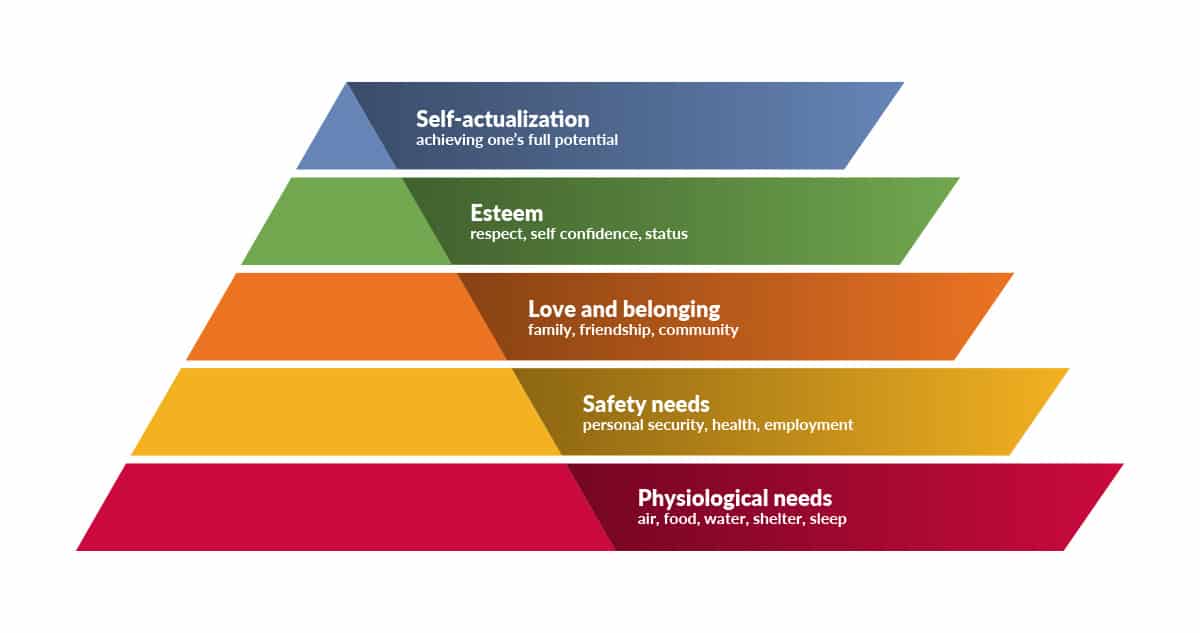
When trying to understand how to become more motivated it is important to identify the needs that we each have. In 1943, Abraham Maslow published his humanist take on the theory of motivation. Maslow believed that everyone is motivated at some point in life to become self-actualized. According to Maslow our behaviors and actions point us toward achieving specific needs. The hierarchy of needs that Maslow developed and published in the article “A Theory of Human Motivation’, suggests that people should fulfill basic needs first. These basic needs include:
Air
Food
Water
Shelter
Sleep
Physiological needs are the first level of needs that every human requires to maintain motivation. These needs deal with what the human body requires to survive and thrive. According to Maslow, these needs are instinctive and if they are not met then individuals are unable to move toward any other motivating factor in the hierarchy of needs. When there is a deficiency in either of these needs we are hindered from making progress toward a higher need. No matter the political, social, or cultural background physiological needs have to be met in order for the individual to see the need in becoming self actualized. If an individual is hungry it is hard to be motivated because the immediate need has yet to be met.
Safety and security is the next level in Maslow’s theory of human needs. This next area of human needs becomes a bit more complicated because it requires meeting needs to protect from harm. These needs are important to individual survival but they are not as vital as physiological needs. These safety needs include:
Health
Employment
Law & Order
Financial Stability
Etc
When an individual does not feel safe they will seek out an environment that meets their level of comfortability. The level of security depends on the individual and is not as broad as basic physiological needs. Moving to a more secure community, finding a more stable job, or increasing your savings account may be where your level of security resides. This point in the pyramid is truly dependent on individual views. We all desire a sense of control and order in our lives so that we are able to maintain motivation while feeling secure.
Social needs are the next level in Maslow’s hierarchy. They differ from Physiological and Safety needs in that they are not necessary to individual survival. Being that humans are social, family and intimate connections are motivating factors in helping individuals through personal issues. Maintaining social connections has been shown to lead to happier individuals who enjoy their surroundings and environment much more. Individuals who experience loneliness are often less motivated to engage in social connections. These social connections include:
Belongingness
Love
Affection
Relationships
Etc
When there is a deficiency in these areas individuals are often left feeling less fulfilled and often suffer from depression and anxiety. It is important for people to feel loved and accepted by those in their lives. Personal relationships play a pivotal role in social connections because they allow individuals to feel love, affection, and a sense of belonging.
The fourth level of Maslow’s pyramid identified esteem as a human need to maintain appreciation and respect. After basic needs have been met individuals begin to develop positive self-love and self esteem feelings. People begin to find pride in their work, home, and social life. The needs included in the esteem level of hierarchy:
Self-esteem
Self-confidence
Recognition
Respect
Etc
The promotion within a group or at work helps to improve esteem by allowing individuals to be recognized for accomplishing a goal. Maslow believed that self-esteem evolved from being loved and uplifted by a positive community and relationships that foster individual development. Being noticed for excellence or unique talent allows us to build our self-esteem and confidence gaining the freedom to grow intellectually.
The final level of Maslow’s pyramid are the self-actualization needs. In this level individuals are able to identify their full potential becoming everything that one is capable of. These individuals are more concerned with personal growth and less concerned with the opinions of others. Reaching this level does not mean that you disregard input from others, but you are not as concerned with personal opinions and are more focused on positive contributions to personal growth. Self-actualizing needs include:
Realizing personal potential
Self-fulfillment
Personal Growth
Creativity
Etc
Maslow identified individuals at this level by the fact that they tend to experience a more stable sense of satisfaction in life, society, and in relationships. These individuals are more grateful for life and are focused on improving themselves as well as those around them. They seek the betterment of the human race instead of the individual. Self-actualizing individuals seem to enjoy life and all its aspects with a clearer understanding that there is a deeper meaning to life.
 Within You